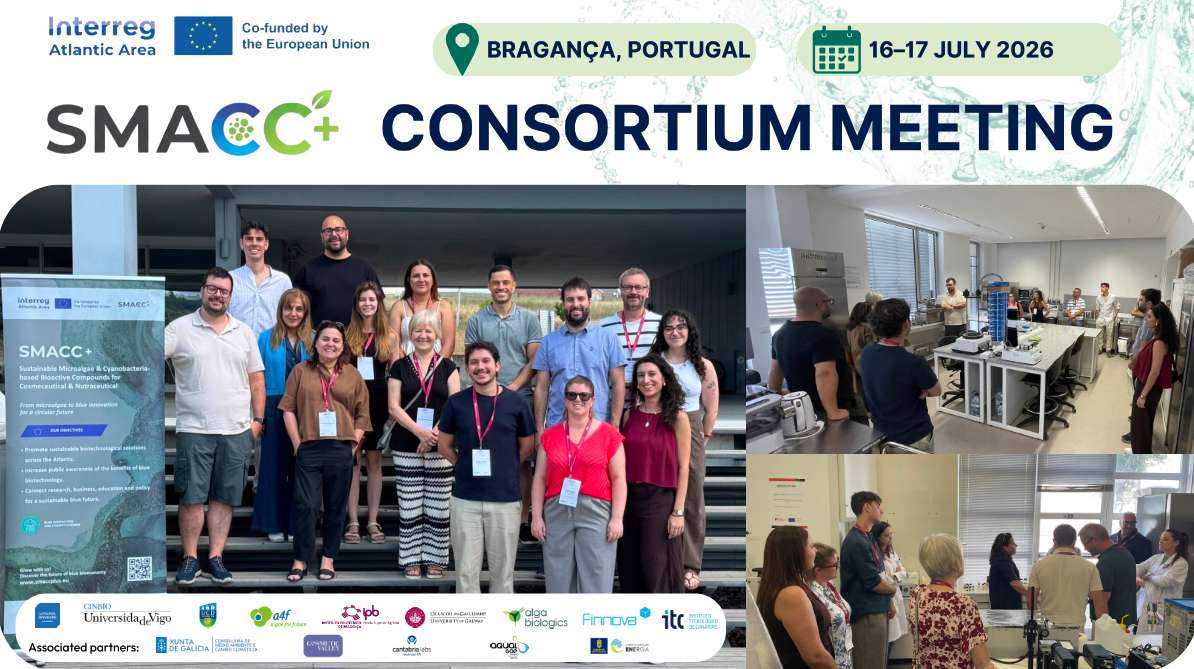
-Project partners reviewed progress, coordinated upcoming activities and reinforced collaboration to accelerate the development of microalgae-based bioactive compounds for cosmeceutical and nutraceutical applications.
The partners of the SMACC+ project met in Bragança, Portugal, on 16–17 July 2026 for the project’s first face-to-face consortium meeting, hosted by the Instituto Politécnico de Bragança (IPB). Over two days of technical sessions, strategic discussions and site visits, the consortium reviewed progress achieved during the first phase of the project and coordinated the next steps towards the development of sustainable microalgae-based bioactive compounds.
Funded by the Interreg Atlantic Area Programme, SMACC+ promotes the sustainable exploitation of microalgae and cyanobacteria as renewable sources of high-value bioactive compounds for the cosmeceutical and nutraceutical sectors. Bringing together universities, research organisations and industry partners from across the Atlantic Area, the project seeks to strengthen cooperation and accelerate the transfer of scientific knowledge into innovative, market-oriented solutions.
The meeting was organised around a comprehensive programme that enabled partners to assess progress across the project’s Work Packages, present technical developments and coordinate upcoming milestones and deliverables. Discussions also focused on administrative and financial management, communication and dissemination activities, and the planning of future actions to ensure the successful implementation of the project.
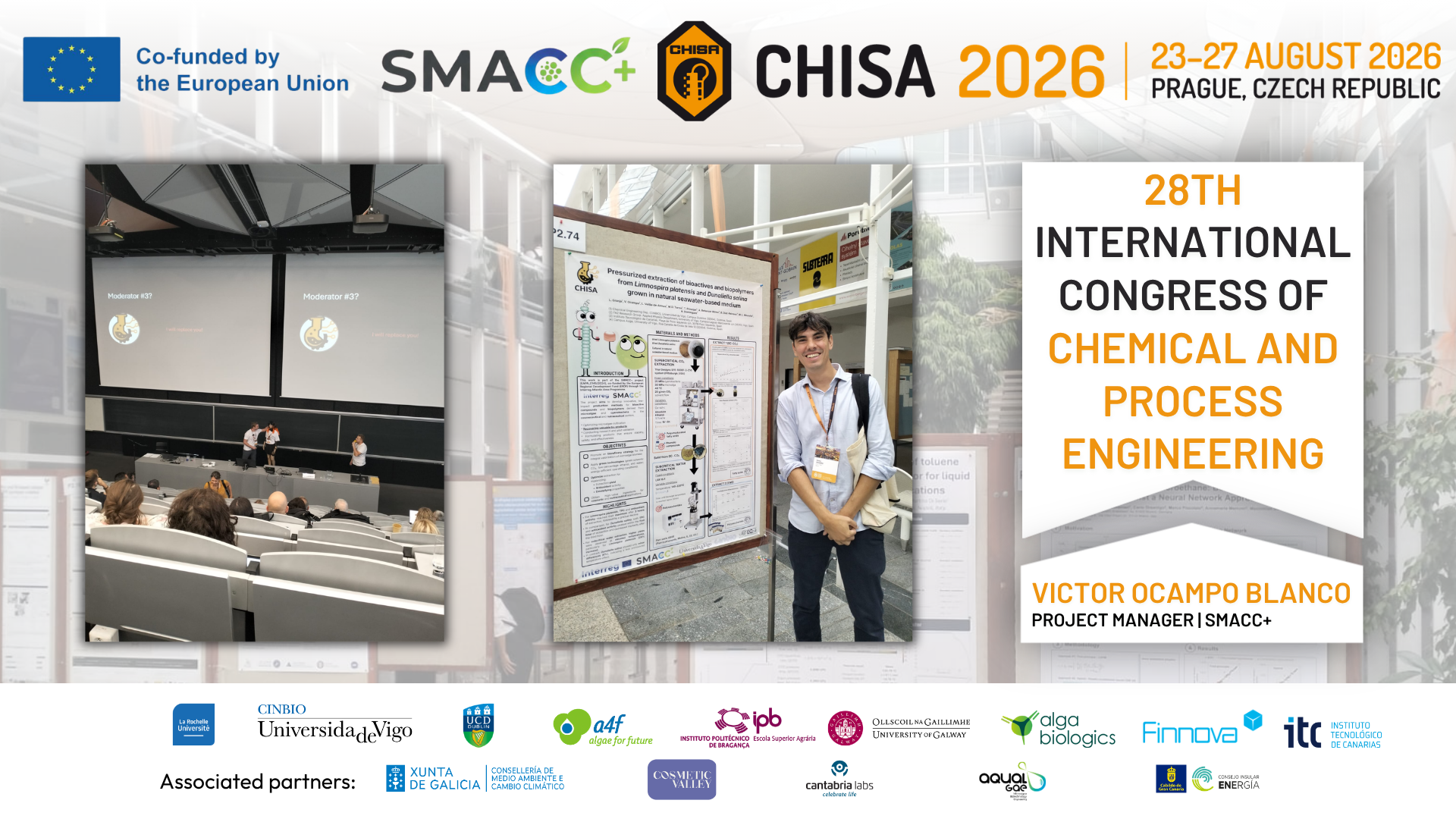
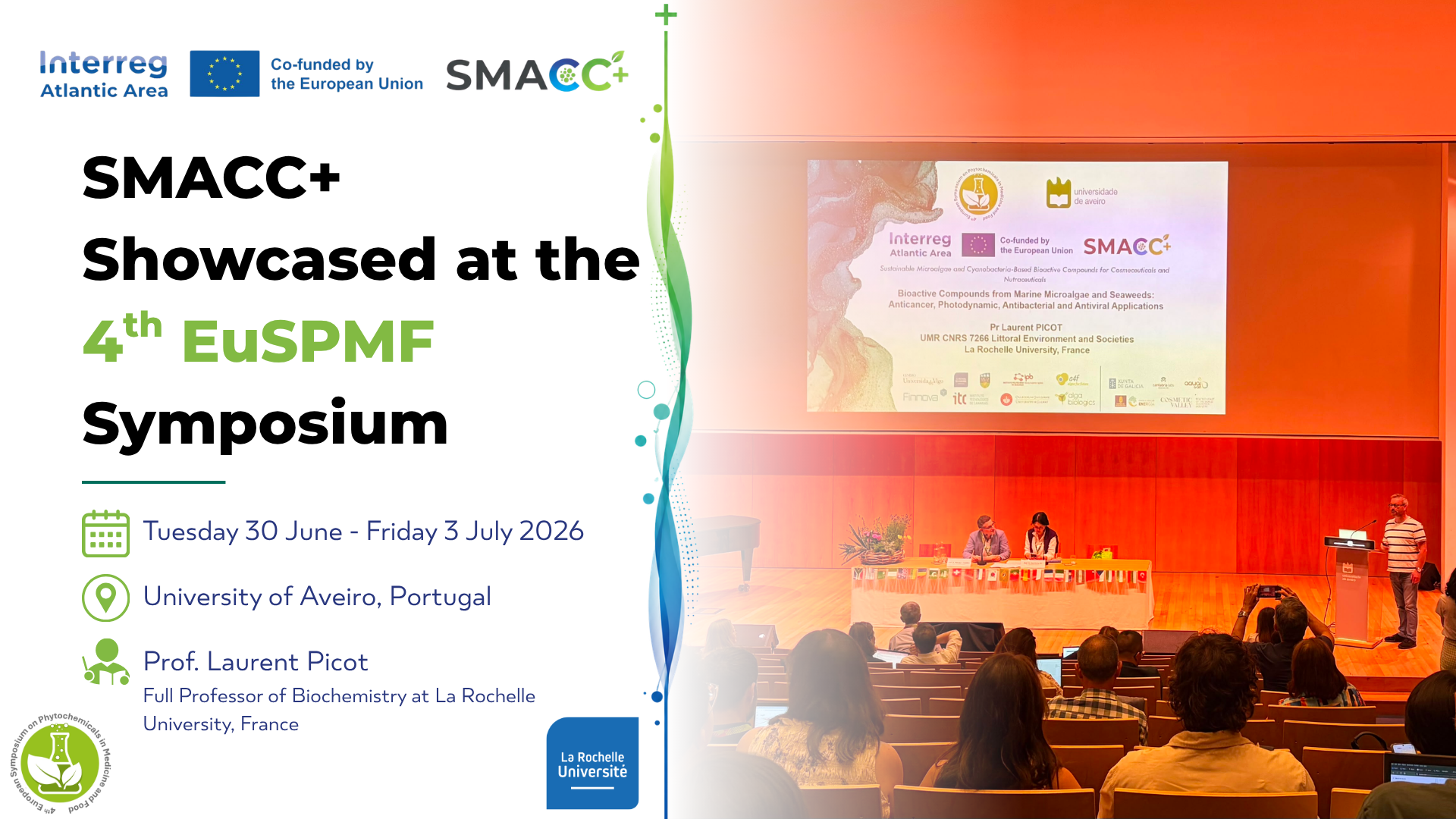
Communication and dissemination formed an important part of the agenda, with La Rochelle University and Fundación Finnova presenting ongoing outreach activities and the project’s communication strategy. Partners also discussed upcoming dissemination opportunities aimed at increasing the visibility of SMACC+ and engaging stakeholders across the Atlantic Area.
Beyond the working sessions, the consortium visited CIMO – the Mountain Research Centre at IPB, where participants learned about ongoing research related to sustainable natural resources and biotechnology. On the second day, partners visited Brigantia EcoPark and MORE, gaining first-hand insight into regional innovation ecosystems and facilities supporting research, technology transfer and sustainable industrial development.
These visits complemented the technical discussions by showcasing practical examples of collaboration between research institutions and industry, reinforcing the project’s ambition to translate scientific advances into sustainable products and processes with real market potential.
Looking ahead
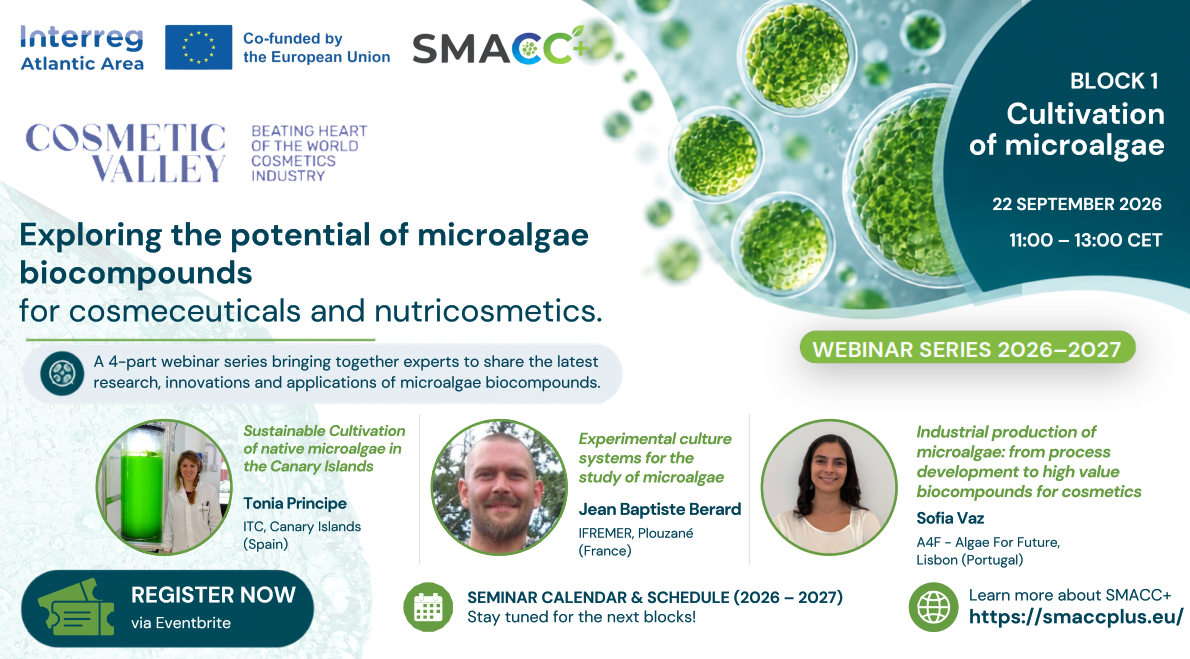
The Bragança meeting also served to prepare the next phase of SMACC+, including several dissemination and knowledge-sharing initiatives. Among them is the SMACC+ Webinar Series 2026–2027, an international programme that will bring together experts from academia, research centres and industry to explore the latest advances in microalgae-derived bioactive compounds for cosmeceutical and nutraceutical applications.
Registration is already open for the first webinar, “Cultivation of Microalgae”, which will take place online on Tuesday 22 September 2026. The session will focus on sustainable cultivation methods, experimental culture systems and industrial production of high-value microalgae biocompounds, featuring experts from Instituto Tecnológico de Canarias (ITC), IFREMER and A4F – Algae For Future.
About SMACC+
Co-funded under the European Regional Development Fund (ERDF) through the Interreg Atlantic Area programme, SMACC+ has a total budget of €2.8 million, of which €2.1 million is co-financed by the ERDF. The project represents a strategic collaboration across nine European partners, combining expertise from academia, research institutions, and industry. The academic and research partners include Universidade de Vigo (Lead Partner, Spain), University College Dublin (Ireland), La Rochelle Université (France), Instituto Tecnológico de Canarias – ITC (Spain), Instituto Politécnico de Bragança (Portugal), and University of Galway (Ireland), Algae For Future - A4F (France) and Alga Biologics (Ireland) and Finnova Foundation (Spain). Additionally, this project counts with the support from its associated partners: Xunta de Galicia, Cosmetic Valley, Cantabria Labs, Aqualgae and Cabildo de Gran Canaria. Together, these partners integrate complementary scientific, technical, and industrial expertise to advance sustainable bioactive compound development and eco-friendly biotechnology solutions.